



EDITORIAL
Is There Any Point in Launching a Podcast in 2026?

The podcasting world is more crowded than ever, everyone seems to have a microphone, and finding an audience can feel like shouting into a very noisy room. But does that mean you’ve missed the boat? Absolutely not. In fact, being yourself, finding your niche and genuinely loving what you do might just be more important than ever.
Has everyone got a podcast now?
Let’s be honest. In 2026, telling someone you’re thinking of starting a podcast is a bit like telling them you’ve decided to get into craft beer or take up cold-water swimming. There’s a good chance they’ll smile politely, nod and tell you about the three podcasts their mates have already launched.
And you can’t really blame them.
Podcasting has exploded over the past decade. What was once a relatively underground medium, populated by enthusiastic amateurs recording conversations in spare bedrooms, has become a fully fledged entertainment industry. Celebrities have podcasts. Footballers have podcasts. Reality TV stars have podcasts. Your neighbour probably has a podcast about conspiracy theories, and there’s a reasonable chance your dentist is considering one about the history of fillings.
Throw in the huge production companies, celebrity exclusives, video podcasts, brand partnerships and increasingly sophisticated marketing campaigns, and it’s understandable that someone sitting at home with a microphone and an idea might wonder whether there’s any point in bothering. After all, hasn’t everything already been done?
Well, yes. And no.
The problem with saturation
There’s no denying that podcasting is a crowded marketplace. The days when simply launching a reasonably entertaining show was enough to attract a substantial audience are largely behind us.
Discovery remains one of podcasting’s biggest challenges. You can spend weeks planning, recording, editing and producing an episode, only to release it into the world and discover that approximately eleven people have listened, three of whom are related to you. And one of those is your mum, who hasn’t actually listened but says she’s very proud. It’s a familiar experience for independent podcasters, and it can be incredibly disheartening.
Meanwhile, established personalities can launch shows with enormous built-in audiences, major publicity campaigns and budgets that most independent creators could only dream of.
But here’s the thing. Podcasting has never really been about competing with everyone. It’s about connecting with someone. And that’s a very important distinction.
The riches are in the niches
If you’re thinking about launching a podcast in 2026, perhaps the biggest mistake you could make is trying to appeal to absolutely everybody.
A podcast about music? Brilliant. But what makes yours different from the thousands already out there? A podcast about football? Lovely. But why should someone listen to yours instead of the dozen they’re already subscribed to?
This is where finding your niche becomes so important. Rather than launching another general music podcast, why not create one dedicated to forgotten indie bands of the 1990s? Instead of another broad film discussion show, how about exploring obscure British horror films from the VHS era? Perhaps you’re obsessed with the history of seaside towns, underground electronic music, unusual hobbies, regional folklore or the lost art of the Saturday morning television programme. Whatever it is, there’s a very good chance that other people share that obsession. And those people could become your audience.
The beauty of podcasting is that you don’t necessarily need hundreds of thousands of listeners to create something meaningful or successful. A thousand genuinely engaged listeners who absolutely love your subject can be far more valuable than ten thousand casual listeners who barely remember your show’s name. They’ll recommend you to friends, engage with your content, send you messages, support your work and, most importantly, return for the next episode.
In an increasingly crowded industry, being specific isn’t necessarily a limitation. It can be your greatest strength.
Passion is something you can’t fake
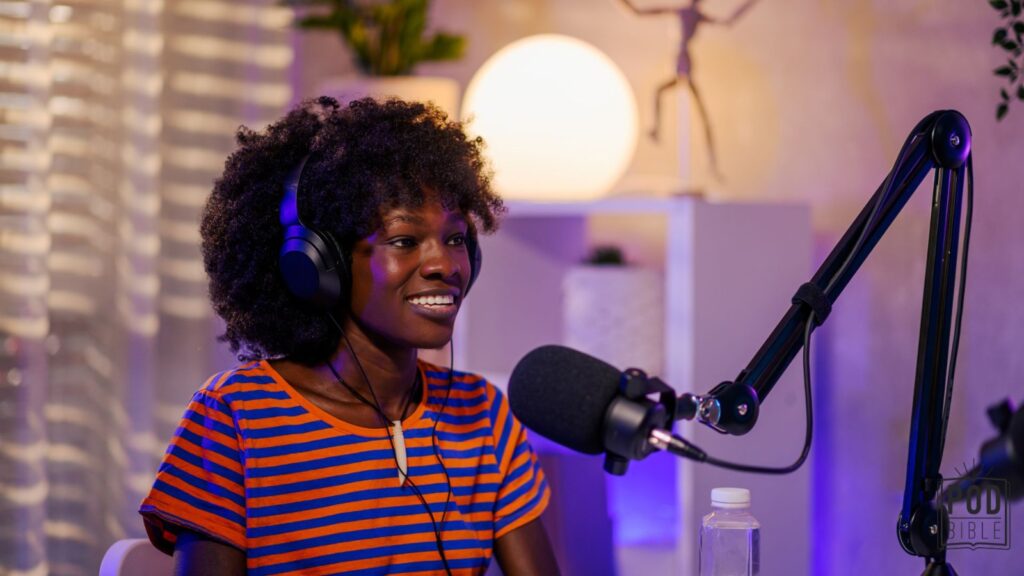
Here’s something I’ve always believed about podcasting. Listeners can tell when someone genuinely loves what they’re talking about.
You can have the most expensive microphones, a beautifully designed logo, a professionally produced introduction and a social media strategy that would make a multinational marketing department weep with envy. But if you sound bored by your own podcast, why on earth should anyone else be interested?
Conversely, someone recording on relatively basic equipment, talking enthusiastically about a subject they absolutely adore, can be utterly captivating. Think about the conversations you’ve had with someone who’s genuinely passionate about something. Even if it’s a subject you know very little about, their enthusiasm can be infectious. That’s exactly what great podcasting can do. Passion brings personality. Personality creates connection. And connection is what keeps people listening.
It’s also worth remembering that podcasting is a surprisingly intimate medium. Whether someone is listening through headphones on their commute, walking the dog or doing the washing up, they’re inviting you into their everyday life. Over time, that familiarity can develop into something rather special. Listeners don’t simply become interested in the subject. They become interested in you. Your opinions, your humour, your experiences and your perspective are all part of what makes a podcast unique. And no matter how saturated the industry becomes, nobody else can replicate those things exactly.
Stop trying to be the next Joe Rogan
One of the strangest things about modern podcasting is the obsession with enormous numbers. Everyone wants millions of downloads, viral clips, sponsorship deals and a studio that looks like the control room of a spaceship. But perhaps we’re measuring success incorrectly.
If you launch a podcast about a subject you love, build a community of 500 people who genuinely look forward to hearing from you every week, and create something that makes those people laugh, think or feel less alone, isn’t that already a success?
Of course, there’s nothing wrong with ambition. Podcasting can create wonderful commercial opportunities, open doors professionally and, in some cases, become a full-time career. But those outcomes shouldn’t be the only reasons for starting.
The reality is that most podcasts won’t become enormous commercial enterprises. And that’s absolutely fine. Not every band needs to headline Glastonbury to justify making music. Not every writer needs to top the bestseller charts to justify writing a book. So why should every podcast need to attract millions of listeners to justify existing? Sometimes creating something worthwhile is reward enough. And ironically, approaching podcasting with that mindset might give you a better chance of building a loyal audience in the first place.
Authenticity beats algorithms
We’re living in an age when creators are constantly encouraged to optimise everything. Make shorter clips. Use stronger hooks. Follow trends. Post at particular times. Create attention-grabbing thumbnails. Say something controversial in the first ten seconds.
And yes, understanding how audiences discover content is important. Social media, YouTube and short-form video can all play valuable roles in helping a podcast grow. But there’s a danger in becoming so obsessed with the algorithm that you forget why you started making the show. If every creative decision is driven by what you think might perform well online, you risk producing something that feels increasingly generic. And generic is the last thing podcasting needs more of.
Your personality isn’t an obstacle to growth. It’s often the very reason people will choose your podcast over somebody else’s. Be funny if you’re funny. Be thoughtful if you’re thoughtful. Be nerdy, enthusiastic, opinionated, curious or wonderfully eccentric. Don’t try to become a watered-down version of a successful presenter. Be the best version of yourself. Because while algorithms might help someone discover your podcast, authenticity is far more likely to make them stay.

The independent podcaster still has an advantage
It’s easy to look at the increasingly corporate world of podcasting and assume that independent creators are at a disadvantage. And in terms of marketing budgets, celebrity access and production resources, they often are. But independence also brings freedom. You don’t need to convince a commissioning editor that your idea will appeal to a mass audience. You don’t need to satisfy a sponsor’s creative demands or produce content designed to fit a particular demographic. You can make the podcast you actually want to make.
You can experiment with formats, explore unusual subjects, invite unexpected guests and change direction when something isn’t working. And perhaps most importantly, you can build a direct relationship with your listeners. That relationship is something the biggest production budgets in the world can’t automatically manufacture. Some of the most interesting podcasts are successful precisely because they don’t sound like traditional media. They’re a little rough around the edges. They wander off topic. They feature genuine conversations, unexpected moments and presenters who aren’t afraid to reveal something of themselves.
That’s not a weakness. It’s what makes them human.
So, should you start a podcast in 2026?
Yes. But perhaps not for the reasons you initially imagined.
Don’t start one because you think it’s an easy route to fame. Don’t start one because somebody told you podcasting is the next big thing. And definitely don’t start one because you’ve seen a celebrity sitting in an expensive studio and thought it looked like a pleasant way to earn a living.
Start one because there’s something you desperately want to talk about. Start one because you have stories to tell, questions to ask or a subject you can’t stop thinking about. Start one because you believe there are people out there who might enjoy sharing that enthusiasm with you. And then give it time.
Your first episodes might be a bit awkward. Your audience might grow painfully slowly. You’ll almost certainly make mistakes, question your abilities and spend an unreasonable amount of time wondering why a particular episode hasn’t performed as well as you’d hoped. Welcome to podcasting. But if you genuinely enjoy the process, those challenges become considerably easier to navigate.
And remember, your audience doesn’t have to be enormous to matter. Somewhere out there could be fifty people who have spent years wishing somebody would make a podcast about exactly the thing you’re obsessed with. Imagine how delighted they’ll be when they finally discover yours.
The final word
Is podcasting saturated in 2026? Undoubtedly. Is it harder to get noticed than it was a decade ago? In many respects, yes. But is there still room for new voices, interesting ideas and passionate people with something to say? Absolutely.
The podcasting industry might be overflowing with content, but there’s always room for genuine enthusiasm, original perspectives and meaningful human connection. And perhaps that’s what we should be celebrating rather than worrying about. Because the next great podcast doesn’t necessarily need a famous presenter, a huge budget or a revolutionary format. It might simply need someone who cares deeply about something and has the confidence to press record.
So if you’ve got an idea for a podcast in 2026, don’t let the size of the industry put you off. Find your niche, embrace your personality and make something you’re genuinely proud of.
You might not find a million listeners. But you might find your people. And surely that’s the whole point.